The Great Junk Transfer: Why Connecticut Families Should Preserve Their Photos, Videos & Family History Before Downsizing
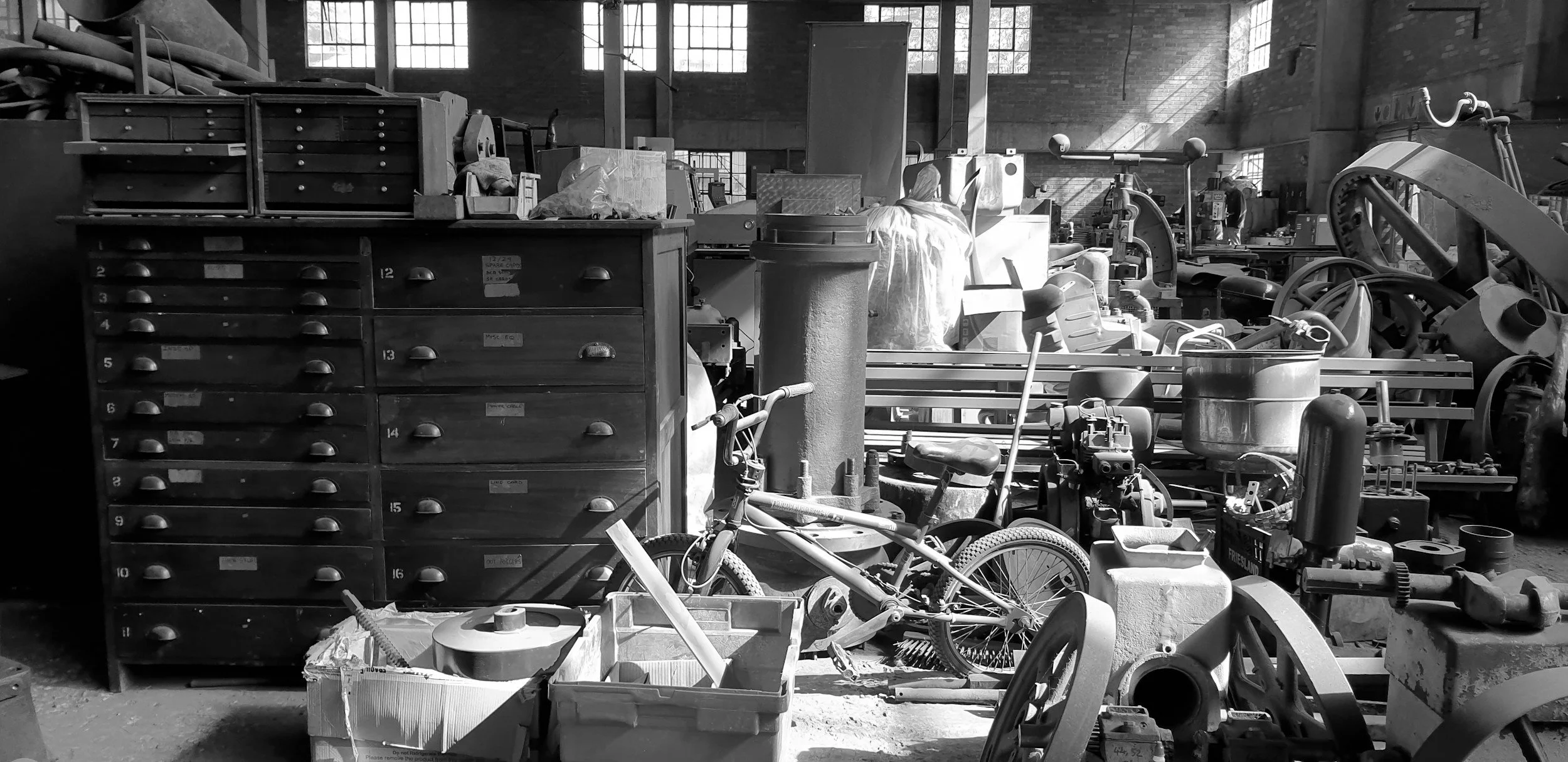
Across Connecticut and the rest of the country, families are beginning to face a massive generational transition. For years, we've heard about the Great Wealth Transfer — the enormous amount of money and property expected to move from Baby Boomers to their children and grandchildren, but there's another transfer happening at the same time.
It's happening in attics, basements, closets, filing cabinets, garages, photo albums, storage bins, old computers, and boxes that may not have been opened in decades. It's being called The Great Junk Transfer, and for families in West Hartford, Hartford County, and throughout Connecticut, it raises an important question:
What should be preserved before a lifetime of belongings is cleaned out, donated, sold, or discarded? At Digital Legacy Studios, we believe families don't necessarily need to keep everything, but they should preserve what matters.
What Is the Great Junk Transfer?
The Great Junk Transfer describes the enormous transfer of physical belongings from older generations to their children and grandchildren as families downsize, move into senior living, settle estates, or clean out family homes.
A 2026 study commissioned by 1-800-GOT-JUNK? found that 49% of Americans would rather inherit nothing than deal with a relative's entire collection of belongings. Only a relatively small percentage actually want everything. Instead, 51% of Americans said they would rather inherit a select few meaningful items.
That tells us something important. Younger generations may not want an entire house filled with possessions, but that doesn't mean they don't care about their family's history. Quite often, what they want most are the things that carry a story.
Photographs.
Home movies.
Letters.
Documents.
Albums.
Recordings.
Family recipes.
Military records.
Immigration documents.
And images of people they may never have had the chance to meet.
Family Photos Are Among the Most Important Things We Inherit
One of the most significant findings from the Great Junk Transfer research involves photographs. Photo albums ranked among the most commonly inherited possessions, and that makes sense.
Furniture can be replaced.
Dishes can be replaced.
Most household items can be replaced.
A photograph of your grandparents on their wedding day cannot.
A VHS tape containing your child's first birthday cannot.
A handwritten letter from a great-grandparent cannot.
A photograph documenting a family member's military service, immigration story, business, childhood home, or community history may be the only surviving record of that moment. These items aren't simply clutter; they are pieces of a family archive, a legacy.
The Most Important Family History May Be Hidden in a Box
Another striking finding from the 2026 report was that 69% of people had discovered something they completely forgot existed while cleaning out a home.
Among the discoveries described in the study were old passports, handwritten letters, family photographs, and a hard drive containing more than 12,000 family photos that had been thought to be lost.
This is exactly why families should be careful during an estate cleanout or senior downsizing project. That old hard drive in a desk drawer may contain twenty years of photographs. The unlabeled VHS tape may contain footage of grandparents who have since passed away. A shoebox in the attic may contain the only surviving photographs of previous generations. An old envelope could contain negatives that haven't been seen in 50 years. A box of slides may document decades of vacations, weddings, birthdays, military service, and family history. If those items are thrown away before anyone understands what they contain, the history stored inside them may be gone forever.
Before the Estate Cleanout, Find the Family Archive
If you're preparing to clean out a parent's or grandparent's home in Connecticut, one of the first steps should be identifying materials that contain family history.
Before calling an estate cleanout company or beginning a major decluttering project, look specifically for:
Loose photographs
Photo albums
Scrapbooks
Framed photographs
Slides
Negatives
VHS tapes
VHS-C tapes
Hi8 and Video8 tapes
MiniDV tapes
8mm and Super 8 film reels
DVDs and CDs
Audio cassettes
Old computers and hard drives
Memory cards
Floppy disks
Letters
Journals
Birth and marriage records
Immigration documents
Military records
Newspaper clippings
Family artwork
Historical business records
Family genealogy materials
These materials should ideally be reviewed before the larger cleanout takes place.
You Don't Have to Keep Everything to Preserve the Story
One of the biggest misconceptions about family history is that preserving it means keeping every physical object.
It doesn't.
Digitization creates another option. A family may have ten boxes of photographs that take up significant space. Those photographs can be professionally digitized, organized, labeled, and backed up. A cabinet full of VHS tapes can become an organized digital video collection. A collection of fragile documents can be preserved digitally while the originals are stored safely or distributed among relatives. Hundreds of slides can become high-resolution digital images that children and grandchildren can actually see. This allows families to reduce the physical volume of an estate without losing the history contained inside it.
You can let go of some of the stuff without letting go of the story.
Digitization Is Only Part of the Process
Scanning is important, but scanning alone doesn't create a useful family archive. Imagine inheriting 8,000 digital files named:
IMG001
IMG002
IMG003
IMG004
Twenty years later, those files may technically still exist, but much of their meaning could be lost.
Who is pictured?
What year was it?
Where was the photograph taken?
Which album did it come from?
Was there handwriting on the back?
Which side of the family did it belong to?
That is why professional digital preservation should include organization and context, not simply scanning. At Digital Legacy Studios, collections can be organized so that the digital structure mirrors the physical collection whenever appropriate. Albums remain grouped. Folders remain identifiable. Tapes can be labeled according to the originals. Relevant handwritten information, dates, names, and captions can be preserved when available, because the goal isn't simply to create digital files.
The goal is to build a family archive that future generations can actually understand.
Senior Downsizing Is Becoming a Major Family Issue
Senior downsizing and estate cleanouts are becoming increasingly common throughout Connecticut. Families in West Hartford, Hartford, Farmington, Avon, Simsbury, Glastonbury, Wethersfield, Newington, New Britain, and communities throughout Hartford County are often faced with decades of possessions that need to be evaluated in a relatively short period of time.
Current Connecticut estate and downsizing resources increasingly emphasize a structured process: determine what should remain with the family, what has value, what can be donated or sold, and what can eventually be removed. Family photographs, documents, videos, and historical media deserve their own category in that process:
Preserve before you purge.
Once the historically meaningful material has been identified and digitized, families can make decisions about the remaining belongings with greater confidence.
Estate Cleanouts Can Make Grief More Difficult
Cleaning out a loved one's home isn't only a logistical project. At times it can be emotional. The Great Junk Transfer study found that many Americans who have cleaned out a relative's home felt that dealing with the volume of belongings made grieving more difficult. Every box requires decisions.
Keep it?
Sell it?
Donate it?
Give it to another family member?
Throw it away?
That process can quickly become overwhelming. Creating a preservation plan before the cleanout can remove at least one major concern: The family's history has already been protected.
Preserve the Stories While Someone Can Still Tell Them
There is another reason not to wait. The photographs may survive for another 50 years. The knowledge surrounding them may not.
Someone in your family may currently know:
“That's Uncle Joe in Hartford in 1954.”
“That's your grandmother's first house.”
“This was taken before Grandpa left for the military.”
“That woman standing next to her was her sister.”
“This home movie was from our trip to Cape Cod.”
But when that person is gone, identifying those people and places may become extremely difficult — or impossible. Digitization projects are often most valuable when they happen before an estate needs to be settled.
Sit down with your parents or grandparents.
Open the albums. Watch the tapes.
Ask questions. Write names down.
Record stories. Identify people.
Preserve handwriting. Capture dates.
The information associated with a photograph can ultimately become as important as the photograph itself.
Digital Assets Are Now Part of Family Estate Planning
Family history no longer exists only in physical boxes. Today, it may also exist across:
External hard drives
Old laptops
Smartphones
SD cards
USB drives
Apple Photos libraries
Google Photos
Cloud accounts
DVDs
CDs
Social media accounts
Digital cameras
That means modern estate planning increasingly needs to consider digital assets and digital inheritance as well as physical belongings.
Families should know where important photographs and videos are stored, how they are backed up, and whether someone else can access those collections in the future.
A digital archive should not depend entirely on one phone, one computer, one cloud account, or one aging hard drive.
What Should I Digitize Before Downsizing?
A good rule is to begin with things that are both irreplaceable and personally meaningful.
Prioritize:
Family photographs
Especially older photographs, fragile prints, albums, framed photographs, and images with names or dates written on them.
Home movies
VHS, VHS-C, Hi8, Video8, Digital8, MiniDV, DVDs, and film reels should be reviewed before equipment needed to play them becomes even harder to find.
Slides and negatives
These frequently contain photographs that were never printed and may exist nowhere else.
Letters and documents
Handwritten letters, immigration documents, military records, certificates, journals, and historical family paperwork can provide important context for future generations.
Digital collections
Old computers, hard drives, memory cards, CDs, DVDs, and photo libraries should be checked before devices are recycled or discarded.
Where Can I Digitize Family Photos and Videos in Connecticut?
Digital Legacy Studios is a white-glove photo scanning, video transfer, media digitization, and archival preservation studio based in West Hartford, Connecticut. We work with families throughout Hartford County and across Connecticut to preserve:
Family photographs
Photo albums
Slides
Negatives
VHS tapes
VHS-C tapes
Hi8 and other camcorder tapes
Film reels
DVDs and CDs
Documents
Artwork
Family archives
Digital photo collections
Historical and estate collections
Unlike large mail-in scanning services, Digital Legacy Studios focuses on careful handling, privacy, organization, metadata, and long-term preservation.
Every collection is treated as something irreplaceable — because it is.
Professional Photo Scanning in West Hartford, Connecticut
For families looking for photo scanning in Connecticut, Digital Legacy Studios provides professional photo digitization from our West Hartford studio.
Photographs are individually handled and cleaned before digitization, with special attention given to fragile, delicate, historical, or oversized materials.
Collections can then be structured into organized digital folders designed to make the archive easier to search, share, understand, and preserve.
Professional VHS and Home Movie Transfer in Connecticut
Home movies are often among the most emotional discoveries during an estate cleanout. A tape may contain a voice you haven't heard in twenty years. A birthday. A wedding. A Christmas morning. A grandparent laughing. Children growing up.
Digital Legacy Studios converts legacy video formats into modern digital files while maintaining organization based on the original physical collection. For many families, those home movies become some of the most valuable materials preserved from an estate.
Preserve First. Then Decide What Stays.
The Great Junk Transfer represents more than a massive movement of household belongings. It represents a transition in how families think about inheritance. Future generations may not want everything we owned. And that's okay! What they are far more likely to value are the stories. The faces. The voices. The moments. The history. The context that tells them where they came from. So before the dumpster arrives... Before the estate sale... Before the donation truck... Before the house is emptied...
Find the photographs. Find the tapes. Find the letters. Find the documents. Find the hard drives.
And preserve the family's story first.
Digital Legacy Studios | Family Archive Preservation in Connecticut
Digital Legacy Studios helps families preserve, digitize, organize, and protect family history through professional photo scanning, video conversion, document digitization, media organization, and archival preservation. Based in West Hartford, Connecticut, we serve clients throughout Hartford County, Greater Connecticut, New England, and beyond.
If you are downsizing, organizing a parent's home, preparing for an estate cleanout, or have inherited a collection of photographs and videos you're not sure how to handle, we can help you decide where to start.
Related Digital Legacy Studios Resources
Professional Photo Digitization Services
Learn how Digital Legacy Studios professionally cleans, digitizes, organizes, and preserves family photographs.
White-Glove Family Archive Digitization & Preservation
Learn more about our complete preservation process for photographs, videos, slides, historical media, and family archives.
Professional Slide Digitization
Preserve aging slides and photographic transparencies before deterioration progresses further.
Institutional & Historical Collection Digitization
Learn about archival preservation services for museums, historical societies, organizations, and historically important collections.
Contact Digital Legacy Studios
Have an estate collection, family archive, or inherited media collection? Contact DLS to discuss your project.
Frequently Asked Questions
What is the Great Junk Transfer?
The Great Junk Transfer describes the massive generational transfer of physical possessions from older generations to their heirs as Baby Boomers downsize and estates are settled. Unlike the Great Wealth Transfer, it focuses on household possessions and the challenge families face deciding what should be kept, donated, sold, discarded, or preserved.
Should I digitize photographs before an estate cleanout?
Yes. Photographs, slides, negatives, videotapes, film, letters, documents, hard drives, and other historically meaningful items should ideally be reviewed before the larger estate cleanout begins. Once something has been discarded, its family history may be impossible to recover.
What family items should I preserve when downsizing?
Start with irreplaceable items containing family history: photographs, photo albums, slides, negatives, home movies, letters, journals, documents, family records, audio recordings, and old digital storage devices.
Can old VHS tapes and home movies still be digitized?
Yes. Many VHS tapes, camcorder tapes, DVDs, film reels, and other legacy formats can still be converted into modern digital files.
Where can I digitize old family photos in Connecticut?
Digital Legacy Studios provides professional photo scanning and family archive digitization from its West Hartford, Connecticut studio, serving families throughout Hartford County and Connecticut.
Can an entire inherited photo collection be organized digitally?
Yes. Large inherited collections can be digitized and organized into folders that reflect the original collection, albums, events, people, dates, or other logical structures. This makes the archive much more useful to future generations.
Should digital photos be included in estate planning?
Yes. Important family photographs and videos may exist only on computers, phones, cloud accounts, hard drives, or memory cards. Families should know where those files are stored, how they are backed up, and how another family member can eventually access them.
This article was inspired by the 2026 “Great Junk Transfer” research commissioned by 1-800-GOT-JUNK? and conducted by Talker Research. Statistics should be attributed to the original research.
