
Frequently asked questions.

Who We Are
Digital Legacy Studios is a white-glove preservation and archival studio based in West Hartford, Connecticut. We specialize in the museum-grade digitization and long-term stewardship of photographs, slides, videotapes, film, and historically significant media for families, museums, and institutions.
Serving West Hartford and all of Hartford County, we also work with clients nationwide and internationally. Every project is handled in-house with meticulous care, intentional structure, and respect for the irreplaceable nature of the media.
We do NOT operate as a bulk mail-in discount service.
We do NOT monetize or sell client content.
We are NOT a discount bulk mail-in only service.
We do NOT automatically upload media to third-party cloud storage without explicit client consent.
We are NOT a franchise or national chain.
-
Digital Legacy Studios is a white-glove media digitization and archival studio based in West Hartford, Connecticut.
We specialize in preserving family photos, slides, negatives, VHS tapes, camcorder videos, film reels, and legacy media, carefully converting everything into organized, high-resolution digital files. Every project is handled locally, by trained professionals, with museum-grade care and attention to detail, so your history is protected for future generations. -
Most digitizing services run like factories, box it, ship it, and hope for the best.
We take the opposite approach.Every item is hand-cleaned and inspected
Files are labeled and organized to match your physical collection
Fragile or historical items receive archival-level handling
You work directly with a real preservation specialist, not a warehouse
Local drop-off, pickup, guidance, and communication throughout your project
Clients choose DLS when accuracy, privacy, and long-term preservation truly matter, not just quick conversion.
-
We provide professional digitization and archival services for almost every legacy format:
Photo & Image Digitization
Loose photos, albums, scrapbook pages
Slides & negatives (all sizes)
Oversized prints & delicate items
Optional photo restoration
Video & Film Transfer
VHS, VHS-C, Hi8, MiniDV, camcorder tapes
8mm, Super 8, and 16mm film reels
DVD/CD transfers & consolidation
Organization & Delivery
Folder structures that mirror your originals
Custom file naming and labeling
Secure download, USB, or external hard drive
Optional setup in Apple Photos, Mylio, FOREVER, or SmugMug
Our goal isn’t just to digitize your media; it’s to make it easy to access, private, and secure to share and pass down.
-
DLS is ideal for people who value preservation quality and organization, including:
Families preserving decades of memories
Estates managing inherited photo and video collections
Genealogists and historians
Museums, archives, and community organizations
Anyone who wants their digitized files organized, not dumped into a folder
If your collection is meaningful, fragile, or historically important, we’re the right partner.
-
Digital Legacy Studios is proudly located in West Hartford, Connecticut.
We serve clients throughout:West Hartford
Hartford County
Greater Connecticut
Surrounding New England + select mail-in projects world wide
Local clients enjoy free consultations, safe drop-off options, and optional pickup, while shipped projects are handled with secure tracking and personal communication every step of the way.
-
At Digital Legacy Studios, our focus is preservation, privacy, and accuracy, not volume or shortcuts. To keep your memories safe and handled with respect, there are a few important things we don’t do:
We are not a bulk mail-in scanning factory.
We don’t run assembly-line digitizing or rush projects through. Every item is cleaned, inspected, and handled by trained professionals, one collection at a time.We don’t upload or share your media without permission.
Your memories are private. Files are never uploaded to cloud services or shared with anyone unless you specifically request it.We don’t reuse, sell, or monetize customer content.
Your photos and videos belong to you, and only you. They are never used for marketing, AI training, advertising, or resale.We are not a franchise or national chain.
We are a boutique, locally operated studio in West Hartford, Connecticut, offering personal service, not an anonymous warehouse.We don’t take shortcuts that risk long-term preservation.
We avoid low-resolution scanning, improper formats, or poor organization practices that make files hard to use later.Our promise is simple: Your memories stay safe, private, and preserved the right way, with care, transparency, and archival best practices.
We don’t just digitize media.
We preserve legacies, structure data, and future-proof memories.

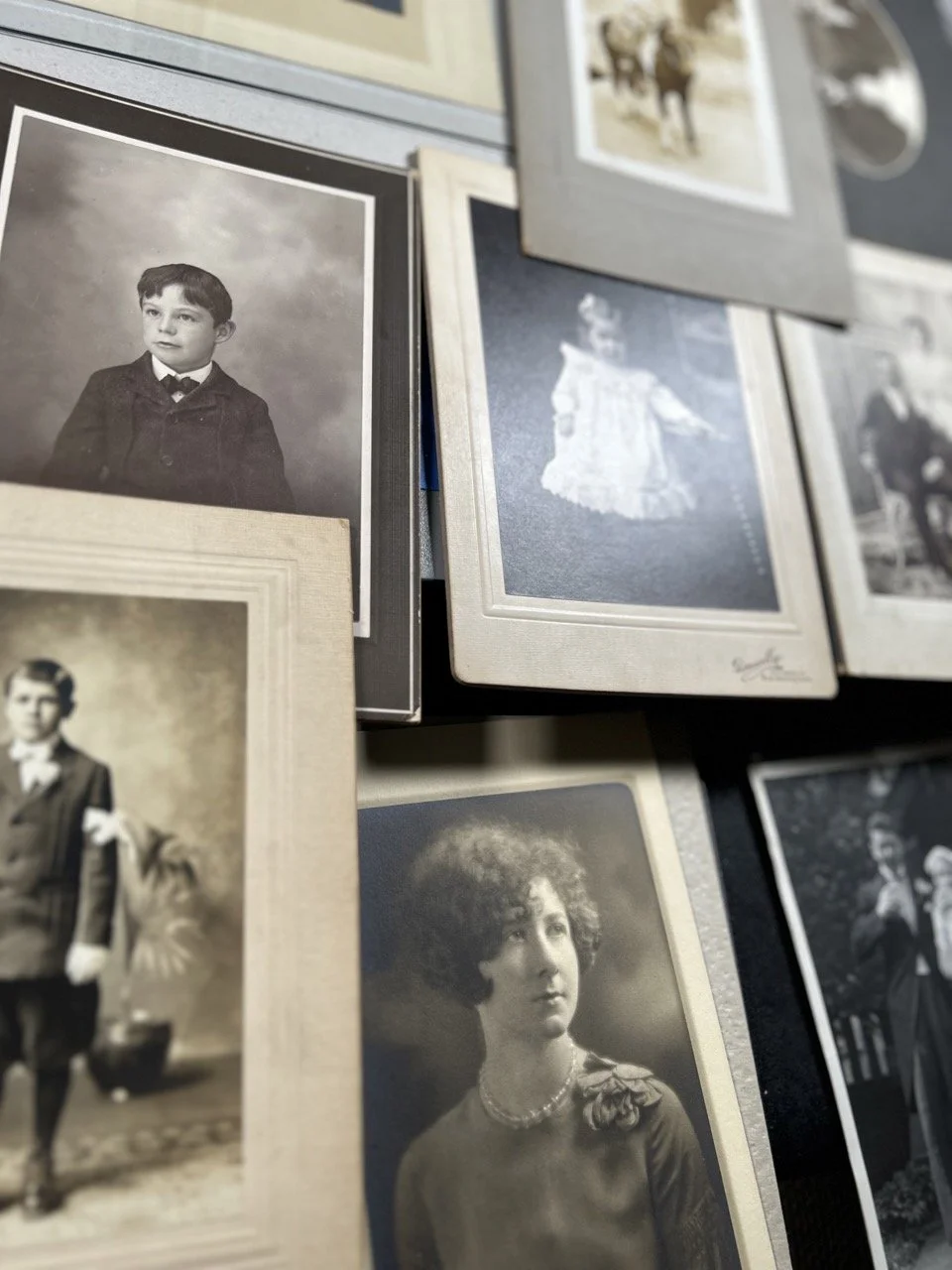


Frequently Asked Questions About Photo Scanning, Video Transfer & Media Digitization
Digital Legacy Studios is a white-glove media digitization and archival service based in West Hartford, Connecticut. We help families, estates, businesses, museums, and historical organizations preserve photographs, slides, negatives, videotapes, film, documents, albums, and other legacy media as organized digital collections. Every project is handled with an emphasis on preservation, privacy, organization, and long-term accessibility.
Where is Digital Legacy Studios located?
Digital Legacy Studios is located in West Hartford, Connecticut, and serves clients throughout Hartford County and Connecticut. Our home studio operates by appointment so each collection can be received, documented, and handled carefully. Local pickup and delivery may also be available for qualifying projects within Hartford County.
What types of media can Digital Legacy Studios digitize?
Digital Legacy Studios works with many types of photographs, video, film, documents, and legacy media.
Common projects include:
Loose photographs
Photo albums and scrapbook pages
Slides
Negatives
Framed photographs
Oversized photographs and documents
Historical documents
Newspapers and clippings
VHS
VHS-C
Hi8 and Video8
MiniDV
DVDs and CDs
8mm and Super 8 film
Audio cassettes
Memory cards and other legacy digital media
Collections containing multiple types of media can be organized together as one structured digital archive.
How much does photo scanning and media digitization cost?
Pricing depends on the type, quantity, condition, and organization of the original media.
Digital Legacy Studios offers individual and bulk pricing for many services. Larger collections may qualify for bulk rates, and projects can be reviewed before work begins so you know the expected scope and cost. Because DLS provides white-glove handling, organization, metadata preservation, cleaning, and quality control, pricing reflects more than simply placing an item through a scanner. A project quote is provided before digitization begins.
How long does digitization take?
Turnaround time depends on the size and complexity of the collection.
Many smaller projects can be completed in approximately one to two weeks, while large archives, albums, damaged media, film collections, or projects requiring detailed organization and metadata may take longer. An estimated turnaround time is provided when your collection is reviewed.
Are my photographs and videos handled locally?
Yes. Digital Legacy Studios is a locally operated preservation home studio in West Hartford, Connecticut.
Projects are handled directly through DLS rather than being sent through a large national bulk-processing warehouse. This provides greater control over handling, organization, privacy, and communication throughout the project.
Do you clean photographs, slides, or media before digitizing them?
Yes.
Media is inspected and appropriately cleaned before digitization when the format allows it. Removing loose dust, debris, fingerprints, or other surface contamination helps produce a cleaner digital capture and reduces unnecessary correction afterward. Fragile or historically significant material is handled according to its condition so cleaning does not cause additional damage.
What resolution do you use for photo scanning?
Standard photographic digitization is generally completed at a minimum of 600 DPI when appropriate for the original material. We follow professional archival digitization and preservation practices informed by the Smithsonian Institution Archives, Federal Agencies Digital Guidelines Initiative (FADGI), National Archives and Records Administration (NARA), and Library of Congress preservation guidance, to ensure your photographs, documents, and family media are preserved with careful handling, high-resolution capture, organized file structures, metadata, quality control, and long-term accessibility in mind.
Higher resolutions may be used for small photographs, slides, negatives, restoration projects, enlargements, archival applications, or historically significant material where additional detail is beneficial. Resolution is selected based on the original media rather than using one setting for every item.
What file formats will I receive?
The final format depends on the type of media and the intended use. Photographs are commonly delivered as high-quality JPEG files for easy viewing and sharing. Archival or specialized projects may also use TIFF or other preservation formats when appropriate. Video is commonly delivered as MP4 files for compatibility with modern computers, televisions, tablets, and phones. Audio can be supplied in common formats such as MP3 or WAV. Specific archival or preservation requirements can be discussed before the project begins.
How are my digital files organized?
Digital Legacy Studios organizes files to reflect the original physical collection whenever possible. For example, if your photographs arrive separated into albums, envelopes, boxes, years, events, or family groups, the digital archive can preserve that same structure.
A completed collection might look like:
Family Archive
→ Album 01
→ Album 02
→ Loose Photos
→ Slides
→ Home Videos
→ Documents
Individual files can also receive consistent naming, dates, descriptive information, keywords, and other metadata when appropriate. The goal is to create an archive that is understandable and usable—not simply a folder containing hundreds or thousands of unidentified files.
Do you preserve metadata?
Yes. Metadata and contextual information can be incorporated into a digital collection when that information is available.
This can include:
Dates
Names
Locations
Events
Album information
Captions
Descriptions
Keywords
File names
Folder relationships
Preserving this information is especially important for family archives because a photograph without context can lose much of its historical value over time.
Can you organize photographs chronologically?
Yes.
If dates, album order, handwritten information, family knowledge, or other identifying information is available, Digital Legacy Studios can use it to help structure a collection chronologically. Separate albums, boxes, envelopes, and other groups can also be combined into a more unified archive when requested.
Can you identify or tag people in photographs?
Yes, depending on the project.
Names and other identifying information supplied by the client can be incorporated into file names, folders, keywords, or metadata. Digital Legacy Studios can also help clients organize their completed collections in systems such as Apple Photos or Mylio, where facial recognition and people tagging can be used to make large family collections easier to search.
Can you restore damaged or faded photographs?
Yes. Photo restoration is available for images requiring additional work beyond standard digitization.
Restoration may include:
Color correction
Exposure adjustment
Dust and scratch reduction
Stain reduction
Minor damage repair
Fading correction
Contrast improvement
The amount of restoration possible depends on the condition and information remaining in the original photograph. The goal is to improve the image while retaining the character and historical integrity of the original whenever possible.
Can you digitize fragile or historically significant photographs and documents?
Yes.
Fragile photographs, documents, albums, newspapers, mounted photographs, artwork, and historically significant materials can require a different workflow than ordinary loose photographs. Digital Legacy Studios evaluates the condition, size, mounting, surface, and physical stability of these materials before determining the safest digitization method. This is one of the reasons DLS does not use a one-size-fits-all scanning workflow.
Can you digitize photo albums without destroying them?
Yes.
Albums can often be digitized while preserving their original arrangement. Depending on the album, photographs may be captured in place, pages may be digitized individually, or photographs may be temporarily removed when it is safe and beneficial to do so. The digital folder structure can then mirror the original album so photographs remain connected to their original context.
What videotape formats can you transfer?
Digital Legacy Studios can transfer many common consumer video formats, including:
VHS
VHS-C
Video8
Hi8
MiniDV
DVDs and certain other recorded media
Each tape is inspected before transfer, and video is captured in real time. Older or deteriorated recordings sometimes require additional testing or specialized recovery work. If a tape cannot be transferred to a quality level that meets DLS standards, we will explain the condition and available options.
What happens if a videotape is damaged or will not play correctly?
Some older tapes experience deterioration, tracking problems, signal loss, mold, damaged tape, or recording-format compatibility issues. DLS may test problematic media using appropriate playback equipment and workflows to determine whether a usable signal can be recovered. If the media requires specialized restoration beyond a standard transfer, it may be classified as a recovery project rather than a normal digitization job. We will communicate any significant issue before proceeding with specialized work.
Do you digitize PAL or international-format videotapes?
Some videotapes were recorded using international video standards such as PAL rather than the NTSC format commonly used in the United States.
These tapes may require specialized playback equipment. If DLS determines that a tape requires equipment or recovery capabilities outside our normal workflow, we will explain the issue and, when possible, recommend an appropriate specialist rather than producing a transfer that does not meet our standards.
Can Digital Legacy Studios digitize 10,000 or more photographs?
Yes. Digital Legacy Studios specializes in substantial family, estate, and institutional collections. Projects involving thousands of photographs, slides, negatives, albums, or mixed media are assessed individually and may be completed in carefully planned phases.
Can you organize photographs from several generations of a family?
Yes. We can structure collections by family branch, generation, event, date, or original album arrangement. When information is available, we also preserve names, locations, captions, and historical context to create meaningful digital archives.
Do clients retain ownership of their photographs and videos?
Yes. Clients retain ownership of their original materials and applicable intellectual property rights. Digitization does not grant Digital Legacy Studios unrestricted rights to sell, publish, or repurpose client media.
Does Digital Legacy Studios use client photographs to train AI?
No. Digital Legacy Studios does not use client photographs, videos, or archival material to train artificial intelligence models. Any optional AI-assisted archival processing is subject to the project's authorized scope and applicable privacy procedures.
Do you send original materials to outside scanning facilities?
Our core family archival digitization services are performed through in-house workflows. Any specialized external processing or approved project-specific arrangements are discussed with the client when applicable.
Do you provide long-term digital archive organization and backup planning?
Yes. We can help clients establish organized master archives, external storage, network-attached storage, local backups, and appropriate off-site backup strategies. The specific architecture depends on the collection's size, technical environment, and preservation goals.
How will I receive my finished files?
Completed digital collections can be delivered through several methods depending on project size and client preference.
Options may include:
Secure digital download
USB or USB-C flash drive
External hard drive
SSD
Client-provided storage media
Assisted setup within a photo-management or archival system
Large collections generally benefit from an external hard drive or SSD rather than a small flash drive. We can also recommend an appropriate storage method based on whether you primarily use a Mac, Windows PC, iPhone, iPad, or other device.
Can you help me import my photographs into Apple Photos or another photo library?
Yes.
Digital Legacy Studios can help organize completed archives for use with platforms such as Apple Photos, Mylio, and other digital-photo management systems.
This may include assistance with:
Importing folders
Preserving organization
Naming people
Facial recognition
Keywords
Albums
Dates
Exporting photographs
Backup strategy
The goal is to make the archive easy for the client and their family to continue using after the digitization project is complete.
Do you offer digital storage?
Digital Legacy Studios does not serve as a permanent long-term storage provider for client collections.
Instead, we help clients establish storage that they control. Depending on the project, that may include USB drives, external hard drives, SSDs, personal cloud storage, archival platforms, or a combination of local and cloud backups. For important family archives, we generally recommend maintaining more than one copy in more than one location.
Who owns my digitized photographs and videos?
You retain ownership of your media and the digital files created from your collection, subject to any underlying third-party copyrights that may apply to the original material. Digital Legacy Studios does not claim ownership of a client's family photographs, videos, documents, or personal archive simply because we digitized them. Your collection remains your collection.
Does Digital Legacy Studios sell customer information or media?
No.
Digital Legacy Studios does not sell, monetize, or commercially exploit client photographs, videos, documents, personal information, or archival collections. Client material is handled as private information and is used only as necessary to perform the services requested by the client.
Are my photographs or videos used to train artificial intelligence?
No.
Digital Legacy Studios does not use client photographs, videos, documents, or family archives to train artificial intelligence systems. Client media is not provided for AI training, data mining, advertising, or unrelated commercial purposes.
Do you upload my media to cloud services automatically?
No.
Digital Legacy Studios does not automatically place client collections on third-party cloud platforms. Cloud-based delivery or storage is only used when appropriate to the project and with the client's knowledge or request. This allows clients to maintain greater control over where their family archive is stored.
Do you create photo montages or custom family videos?
Digital Legacy Studios focuses primarily on professional digitization, preservation, organization, metadata, archival structure, and long-term accessibility.
We do not generally create custom photo montages or heavily produced family-history videos. Instead, we can prepare and organize the photographs and videos so they are ready for use in Apple Photos, Mylio, editing software, presentation software, or another platform chosen by the client.
Do you work with museums, historical societies, businesses, and institutions?
Yes.
Digital Legacy Studios works with private families as well as organizations that need professional digitization and archival support. Institutional projects can include photographs, documents, slides, negatives, film, video, historical records, and mixed-media collections. Projects can be structured around preservation requirements, file naming conventions, metadata, collection hierarchy, and long-term digital access.
Do you offer pickup and delivery?
Pickup and delivery may be available for projects within Hartford County. Availability depends on project size and location. Appointments can also be scheduled for drop-off and pickup in West Hartford.
Do you offer a discount for studio drop-off?
Digital Legacy Studios currently provides a 10% discount for qualifying projects dropped off directly at our West Hartford studio. Appointments are required so adequate time can be reserved to review and document the collection.
Do I need an appointment?
Yes.
Digital Legacy Studios operates by appointment so each client's collection can receive individual attention during intake and pickup/drop off. This also allows us to review the media with you, understand its organization, document special instructions, and discuss how you would like the completed digital archive structured.
What happens to my original media after digitization?
Your original photographs, albums, videotapes, documents, and other physical media are returned to you when the project is complete. Digitization does not transfer ownership of the originals to Digital Legacy Studios. We generally recommend keeping historically or sentimentally important originals even after they have been digitized.
How long are completed digital files retained?
Digital Legacy Studios maintains completed project files temporarily to allow time for delivery and verification. Clients should download, copy, and back up their completed collection promptly after delivery. Long-term preservation should rely on storage controlled by the client rather than assuming the studio will permanently retain the files.
What is the best way to protect my digital family archive?
Important digital collections should have multiple copies.
A strong preservation strategy typically includes:
A primary working copy on your computer or main storage device.
A separate backup on an external hard drive or SSD.
An additional copy stored in another secure location or reputable cloud/archival service.
This reduces the risk of losing an entire family archive because of drive failure, theft, fire, accidental deletion, or another single event.
Why choose Digital Legacy Studios instead of a large mail-in scanning company?
Digital Legacy Studios is designed for clients who value individual handling, privacy, organization, and preservation. Rather than treating a collection as a batch of anonymous media, we focus on preserving the relationship between the physical collection and the digital archive.
That can include:
Individual inspection and cleaning
Local handling
High-resolution digitization
Preservation of physical order
Structured folders
Descriptive file naming
Metadata
Quality control
Direct communication
Privacy-focused handling
Guidance for long-term storage
The objective is not simply to create digital files. It is to create an organized archive that remains understandable and useful to future generations.
How do I start a digitization project?
The best way to begin is to contact Digital Legacy Studios with a general description of your collection. Include the types of media you have and an approximate quantity if possible. We can then determine the appropriate workflow, provide an estimated cost and turnaround time, and schedule an appointment to review the collection.